Author Archives: DrE

Dog stops car for help for owner who had a seizure

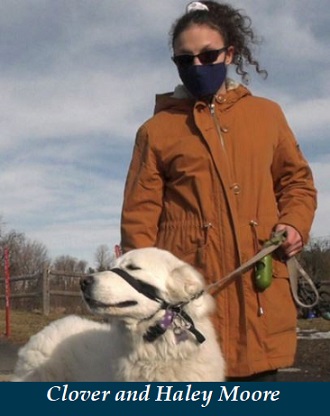
Colton Praill report for CTV News that on March 16, 2021, Haley Moore was walking her 1½-year-old dog, Clover, a Maremma sheepdog mix, in their Stittsville neighborhood in Ottawa, Canada, when she collapsed to the ground in a seizure.

Moore said, “All I remember is waking up in the ambulance and being really confused; just like what is going on.”

But a neighbor’s security camera captured what happened.

The video shows Clover springing into action.

First, Clover checked on her human to determine that Haley was in a medical emergency.

Then, Clover watched as a car passed by.

Moments later, a second vehicle approached –a truck. This time, Clover freed her leash from Haley’s grasp, then risked her own safety by standing in front of the truck, forcing the driver to stop.

The driver, 21-year-old Dryden Oatway, quickly got out of his truck to help the fallen Haley, watched closely by Clover.

Dryden said: “It was really impressive, the dog actually blocked my way. She kind of backed into the road to block my truck. The whole time she was backing down the street she had eyes on Hailey; didn’t look away from her. She kept her distance from me but made sure her owner was okay and that was amazing.”

Dryden tried to get help from a nearby neighbor before returning to tend to Moore.

Clover then caught the attention of another driver, Danielle Pilon, who stopped to help.

Pilon said, “Immediately I just stopped and I jumped out of the Jeep and I asked Dryden if everything was okay and he was like, ‘I don’t know, she fell.'”

It was then that Clover ran back home to get more help.

Pilon said: “You could tell she [Clover] didn’t want to leave her [Haley] even when we were with her but I think it just came to her that she was like ‘I need to go home to let them know she needs help.'”

By the time Clover and her family returned to the scene, Haley was in an ambulance being treated by paramedics.

Haley’s father, Randall Moore, said: “When I got a knock on the door from the neighbors, they were frantic and our dog Clover was barking like crazy. To see my daughter, face full of mud, and she was incoherent, wasn’t sure where she was, it was just terrifying, it really was.”

Thankfully, Haley was okay. The family isn’t sure what caused the sudden seizure, but Haley says she’s comforted by the fact that she’ll have her dog there to protect her: “If this ends up happening again, I feel 10 times safer and I know she will be there for me. You know how good animals are and she’s a really amazing dog and I love her to death.”

Clover got a big steak as a reward. 🙂

Randall Moore said: “[My wife] Diane comes home with a couple of big steaks and I thought ‘Wow, this is great, I’m getting a big steak’ and she said, ‘No, it’s for Clover for doing such a great job.'”

~E

Holy Saturday: Our Lord stormed the gates of Hell

“. . . was crucified, died and was buried; he descended into hell; on the third day he rose again from the dead….” –Apostles’ Creed

The Saturday between Good Friday (when our Lord was crucified) and Easter Sunday (when He rose from the dead) is given little attention, although what Jesus did in that interregnum is no less significant.

On Holy Saturday, Jesus Christ our Lord undertook some of the most dramatic and important work of His salvific mission.

He went into the depths of “hell” — a realm of the dead called “the limbo of the patriarchs,” which was without the punishments of the damned and which no longer exists.

There, awaiting His coming, were the departed just. Among them were Adam and Eve (despite their terrible sin of grandiosity and disobedience, the lasting legacy of which is the Original Sin that stains every human), St. John the Baptist, and Jesus’ foster-father St. Joseph, the man’s man who protected the infant and child Jesus from Roman soldiers.

To the souls of the just, Jesus proclaimed He had won their salvation and led them as the first entrants into Heaven.

What a magnificent sight that must have been!

From an ancient homily for Holy Saturday:

Something strange is happening – there is a great silence on earth today, a great silence and stillness. The whole earth keeps silence because the King is asleep. The earth trembled and is still because God has fallen asleep in the flesh and he has raised up all who have slept ever since the world began. God has died in the flesh and hell trembles with fear.

He has gone to search for our first parent, as for a lost sheep. Greatly desiring to visit those who live in darkness and in the shadow of death, he has gone to free from sorrow the captives Adam and Eve, he who is both God and the son of Eve. The Lord approached them bearing the cross, the weapon that had won him the victory. At the sight of him, Adam, the first man he had created, struck his breast in terror and cried out to everyone: “My Lord be with you all.” Christ answered him: “And with your spirit.” He took him by the hand and raised him up, saying:

“Awake, O sleeper, and rise from the dead, and Christ will give you light.

I am your God, who for your sake have become your son. Out of love for you and for your descendants I now by my own authority command all who are held in bondage to come forth, all who are in darkness to be enlightened, all who are sleeping to arise.

I order you, O sleeper, to awake. I did not create you to be held a prisoner in hell. Rise from the dead, for I am the life of the dead. Rise up, work of my hands, you who were created in my image. Rise, let us leave this place, for you are in me and I am in you; together we form only one person and we cannot be separated. For your sake I, your God, became your son; I, the Lord, took the form of a slave; I, whose home is above the heavens, descended to the earth and beneath the earth.

For your sake, for the sake of man, I became like a man without help, free among the dead. For the sake of you, who left a garden, I was betrayed to the Jews in a garden, and I was crucified in a garden.

See on my face the spittle I received in order to restore to you the life I once breathed into you. See there the marks of the blows I received in order to refashion your warped nature in my image. On my back see the marks of the scourging I endured to remove the burden of sin that weighs upon your back. See my hands, nailed firmly to a tree, for you who once wickedly stretched out your hand to a tree.
I slept on the cross and a sword pierced my side for you who slept in paradise and brought forth Eve from your side. My side has healed the pain in yours. My sleep will rouse you from your sleep in hell. The sword that pierced me has sheathed the sword that was turned against you.

Rise, let us leave this place. The enemy led you out of the earthly paradise. I will not restore you to that paradise, but I will enthrone you in heaven. I forbade you the tree that was only a symbol of life, but see, I who am life itself am now one with you. I appointed cherubim to guard you as slaves are guarded, but now I make them worship you as God.

The throne formed by cherubim awaits you, its bearers swift and eager. The bridal chamber is adorned, the banquet is ready, the eternal dwelling places are prepared, the treasure houses of all good things lie open. The kingdom of heaven has been prepared for you from all eternity.”

Be Joyous!

~E

The cat who comforts the dying

The Steere House Nursing and Rehabilitation Center in Providence, Rhode Island, believes in the therapeutic benefits of animal companionship and is home to a variety of animals, including a number of cats, parakeets, a floppy-eared bunny and several regular canine visitors.

But Oscar the cat is unique.

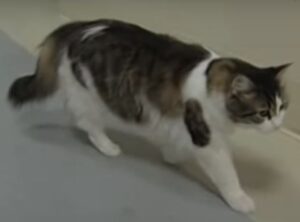
Oscar came to Steere House 11 years ago as a kitten. The staff decided to adopt him, and he immediately took on a very vital role for the nursing home. Oscar has the uncanny ability to sense when patients are dying and stays with them in their time of need. Oscar’s presence notifies the nurses that help is needed and enables the family members to prepare for the end.

Oscar made headlines in 2007 when he was featured in an article by David Dosa, M.D., in the New England Journal of Medicine. In the article, Dr. Dosa described how Oscar has demonstrated an ability to detect a patient’s impending death and how in doing so, he is able to provide a touch of comfort to the dying, elderly residents of Steere House’s Safe Haven Advanced Care unit and their families who are dealing with the latter stages of Alzheimer’s Disease and other forms of end-stage dementia.

I found these interesting comments by viewers of the video on YouTube:

“I’ve worked at a nursing home. We had a cat that curled up next to passing residents. Not every time, but often. It’s not uncommon.”

“Fascinating! Oscar is the split image of my cat Pip, they look exactly the same and both have shown an uncanny insight re the health and well-being of people to whom they are closely associated with. I live alone with my pet cat, Pip and at night she always sleeps at the foot of my bed. One evening last year after I had gone to bed, Pip came in and jumped up close to my head and immediately began to rummage her nose through my beard and under my chin, mainly on one side of my neck. This was very strange and unusual behaviour for my cat. I fell asleep soon after about 15 minutes of this treatment. In the morning Pip had gone out and I thought no more about what had happened but in the afternoon I I felt a little pain in my throat. This pain then continued daily and every time I was resting Pip would repeat what had happened that night. I began to sense that there was something seriously wrong with my throat and thought that Pip was trying to tell me this. Over the following weeks I saw 3 GPs and not one of them diagnosed my problem. Eventually I managed to get an appointment with a consultant at a hospital quite a long way from where I live and with a special instrument he was able to look far enough down my throat to see that I had a growth on my `voice-box` The biopsy showed that I had cancer. I underwent radiotherapy (6 sessions over 3 weeks) The cancer pain disappeared after 3 sessions and on the day that the pain went, Pip resumed sleeping at the foot of my bed I feel now that the cancer has gone, and Pip seems to think so.”

“Its true cats are amazing creatures. My elderly dad suffered a fall in the middle of the night on his way to the bathroom and hit his head and wasn’t able to get up. He was 98 years old. Our cat was outside at the time and he ran to my mom’s bedroom window and meowed until she woke up to let him in (around 3am) where she found my dad on the dining room floor in a pool of blood and called 911 to get him help. If it weren’t for our cat, my mom wouldn’t have found him until the morning.”

“I hope I have a cat lay next to me if I should have to live out my last days alone in a nursing home.”

See also “Peyo, the horse who comforts the sick and dying“.

~E

Good Friday: Remembering His Passion and Sacrificial Love

Good Friday, April 2, 2021

The account below is difficult for us to read.

You will weep, if you have a heart.

Imagine how many hundred times difficult it was for our Lord, who endured all of it.

He sweated blood.

After He and his disciples had observed the Passover meal in an upper room in a home in southwest Jerusalem, they traveled to the Mount of Olives, northeast of the city.

There, in the garden of Gethsemane, for 12 hours (from 9 p.m. Thursday to 9 a.m. Friday), He prayed. He saw all the sins of humanity — past, present, and future — for which He would atone. The cumulative effect of what He saw was so horrific that He sweated bloodhematidrosis, or hemorrhage into the sweat glands. His skin became fragile and tender from the hematidrosis, and He felt chilled in the night air.

Then the Roman soldiers came to arrest Him and took Him away — He who had committed no crime and no wrong, but instead had fed the hungry, healed the sick and blind, and even raised the dead.

He was scourged at least 39 times.

Scourging or flogging was a legal preliminary to every Roman execution. The usual instrument was a short whip (flagellum) with several single or braided leather thongs of variable lengths, in which small iron balls or sharp pieces of sheep bones were tied at intervals. Occasionally, staves also were used.

He was stripped of his clothing, His hands tied to an upright post. His back, buttocks, and legs were flogged either by two soldiers or by one who alternated positions. The scourging was intended to weaken Him to a state just short of collapse or death.

As the Roman soldiers repeatedly struck His back with full force, the iron balls caused deep contusions, and the leather thongs and sheep bones cut into His skin and subcutaneous tissues. Then, as the flogging continued, the lacerations tore into His underlying skeletal muscles and produced quivering ribbons of bleeding flesh. Pain and blood loss set the stage for circulatory shock.

His scalp was pierced with thorns.

The Roman soldiers, amused that this weakened man had been acclaimed a king just days ago when He entered Jerusalem on a donkey, mocked Him by placing a robe on his shoulders, a crown of thorns on His head, and a wooden staff as a scepter in His right hand. Next, they spat on Him and struck Him on the head with the wooden staff.

The crown of thorns was not a crown at all. It was probably a bush roughly applied, and tied on with rope.

The thorns probably came from the Lote Tree, a wild bush that still grows freely all over the Holy Land. This bush had thorns between one to two inches long. There are over 70 scalp wounds visible on the man whose image is seared forever into the Shroud of Turin.

The soldiers’ beating with the rods to His head covered with this crown would have caused severe bleeding. It is probable that the clump of thorns was removed before His tunic was put back onto His body, and then reapplied during the Crucifixion. The blood trickling down from the newly opened head wounds suggest that the thorns were reapplied before the Crucifixion.

Imagine the pain you’d feel if just one thorn, measuring 1 to 2 inches long, were stuck into your scalp . . . .

He carried his own cross, weighing 125 lb.

The severe scourging, with its intense pain and appreciable blood loss, most probably left Him in a pre-shock state. Moreover, hematidrosis had rendered his skin particularly tender. The physical and mental abuse, as well as the lack of food, water, and sleep, also contributed to His generally weakened state.

Therefore, even before the actual crucifixion, His physical condition already was serious and probably critical.

It was customary for the condemned man to carry his own cross from the flogging post to the site of crucifixion outside the city walls.

Since the weight of the entire cross was probably well over 300 lb., “only” the crossbar or patibulum — weighing 75 to 125 lb. — was carried. The patibulum was placed across the nape of His neck and balanced along both shoulders, His outstretched arms tied to the crossbar. The processional to the site of crucifixion was led by a complete Roman military guard, headed by a centurion.

He was nailed to a cross to die.

The Romans did not invent crucifixions, but they perfected it as a form of torture and capital punishment designed to produce a slow death with maximum pain and suffering. It was one of the most disgraceful and cruelest methods of execution and usually was reserved only for slaves, foreigners, revolutionaries, and the vilest of criminals.

At the site of execution, by law, He was given gall as a mild analgesic — a bitter drink of wine mixed with myrrh. He was then thrown to the ground on his back, with his arms outstretched along the patibulum.

His hands were nailed to the crossbar at the wrists. The nails were tapered iron spikes approximately 5 to 7 inches long with a square shaft 3/8 in. across.

After both arms were fixed to the crossbar, He and the patibulum, together, were lifted onto the stipes. Next, His feet were nailed to the front of the stipes.

Every breath He took was a struggle, seared with pain.

The weight of His body, pulling down on the outstretched arms and shoulders, fixed the intercostal muscles in an inhalation state and thereby hinder passive exhalation. Accordingly, exhalation was primarily diaphragmatic, and breathing was shallow. This form of respiration would not suffice and hypercarbia (abnormally-elevated carbon dioxide levels in the blood) soon resulted. The onset of muscle cramps or tetanic contractions, due to fatigue and hypercarbia, further hindered His breathing.

Every breath He took was a struggle, shot with agonizing pain.

To exhale, He had to lift His body by pushing up on His feet, flexing His elbows and adducting His shoulders. However, this maneuver placed the entire weight of the body on His tarsals, producing searing pain. Furthermore, flexion of His elbows caused rotation of His wrists about the iron nails, causing fiery pain along the damaged median nerves. Lifting of the body also painfully scraped His scourged back against the rough wooden stipes. Muscle cramps and paresthesias (pins and needles) of the outstretched and uplifted arms added to the discomfort. As a result, each respiratory effort became agonizing and tiring and led eventually to asphyxia (depletion of oxygen to the body).

After “only” 3 to 6 hours hung on the cross, He breathed his last.

He suffered terribly, unto death, for each one of us. 

God loves us this much.

So many Christians in America and other countries, like Italy, still cannot go to church this Easter season because governments have closed churches to contain the spread of the COVID-19 Wuhan virus. But we can remember His Passion today by going online for the Stations of the Cross. Go here.

See also:

In memory of His love,

~E

Wednesday Funnies!

~E

Horses can recognize their reflection in mirror

The ability of visual self-recognition, as in recognizing oneself in a reflection in mirror is a measurement of self-awareness — the experience of one’s own personality or individuality.

However, animals can be self-aware in ways not measured by the mirror test, such as distinguishing between their own and others’ songs and scents.

Phoebe Southworth reports for the UK Telegraph, March 27, 2021, that many primates, as well as elephants, bottlenose dolphins, magpies and a small fish called a cleaner wrasse have previously been found capable of recognizing their mirror reflection.

But a recent study led by Dr. Paolo Baragli of the University of Pisa in Italy, published in the journal Animal Cognition, found that horses, too, can recognize their reflection in a mirror and even preen themselves.

Methodology:

  • A large standing mirror was placed in an indoor arena, into which a horse would be let loose one at a time.
  • At first, the horses all behaved as if their reflection was another horse. Some tried to play with their mirror image, others showed fear or aggression towards it.
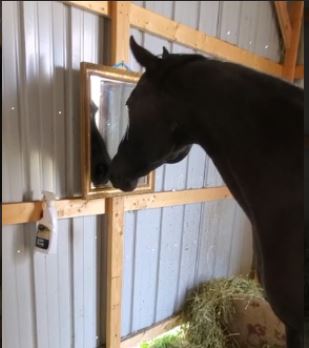
  • However, the majority eventually began to investigate this “other horse” they could see in the glass. 11 of the 14 horses moved their heads around and saw their reflection move in tandem. They also walked around the back of the mirror, as if they were checking whether the image they saw was three dimensional. Some even stuck their tongues out at the glass to be absolutely sure the mystery horse was them. The horses appeared to finally understand they were not looking at a fellow equine.
  • Scientists then used medical ultrasound gel to paint a colored X on the 11 horses’ cheeks. Their reactions, filmed in a total of 22 hours of footage, were then analyzed.
  • All the horses stood in front of the mirror and appeared to recognize that they had a mark on their face, as they were seen rubbing their marked cheek against their leg then checking their reflection again to see if the X had gone. 

Dr. Baragli said: “They’re either trying to explore the mark on their face or trying to get it off. It’s hard to imagine there’s any other reason for this behavior.”

But some experts are skeptical of the findings and argue that the horses would never have investigated their reflection in the mirror if they hadn’t been prompted to do so. Gordon Gallup, a psychologist at the University at Albany in New York, said: “None of the horses spontaneously used the mirror to investigate parts of their bodies that could not be seen without a mirror.”

Dr. Baragli remains convinced the horses’ behavior shows they understand they are looking at themselves in the mirror, and that they can use the mirror to make modifications to their appearance. He believes this is an important first step in establishing whether all equines comprehend the concept of individuality and are conscious of how they look.

Telegraph readers, like the comment below, noted that horses must have seen and recognized their reflection in water when they bend down to drink:

Of course horses know their own reflection, they have been looking at themselves when drinking for aeons. The same goes for zebras, and countless other animals. They would startle if they saw the face of a lion behind the head of the horse in the water.

Other readers point out that research like this, hopefully, will make us humans be less cruel toward animals:

We have been underestimating the abilities and sensitivities of animals for ever. That is how we are able to enslave and mistreat them. Sooner or later, research like this is going to make us see that.

~E

RIP, Dave (1964-2020)

Today, March 29, would have been Dave’s 57th birthday.

Dave was a reader of Fellowship of the Minds from almost the founding of FOTM on December 23, 2009, and became a contributing writer soon after.

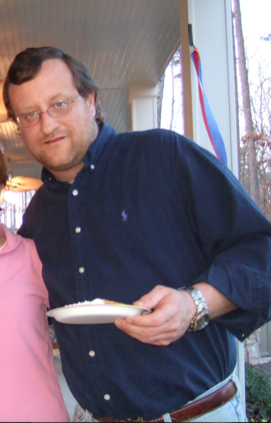
A civil engineer in mapping and land-surveying by profession, Dave was a staunch conservative-libertarian and had a great sense of humor.

Although his contributions to FOTM had greatly diminished in recent years because of ill health, this post of his, “Too Funny Not to Share,” on September 23, 2019, should give you an idea of both his conservativism and sense of humor:

Too Funny Not to Share

What happens when a climate change protester kook tries to take away a French cop’s weapon:

Watch this hypnotic GIF of a climate protester trying to take a cop’s rifle

Note: You have to click on the link at the top.

LOL – I bet you can’t stop watching it. 😁

– Dave

I downloaded the GIF, then uploaded it to FOTM to make it more readily viewable for our readers:

Last year, it dawned on me that I had not seen comments from Dave for quite some time — his last comment was in March 2020.

I first emailed him, but received no response.

Then I called him, and left a voice mail. (He lived alone.)

Days and weeks went by.

Still no response.

I began searching online for obituaries, but found none.

Finally, while rummaging through my saved emails one day, I happened on an email from Dave’s sister-in-law, Kristy, who had emailed me in December 2013 during one of Dave’s hospitalizations.

I emailed Kristy, inquiring about Dave, although by then I knew something was very wrong.

Kristy promptly wrote back with the sad news that Dave had passed on June 9, 2020 from liver failure. She wrote:

He was in terrible health and had stayed away from the hospital because he was afraid he’d get Covid. I believe he’d still be alive today if he had been able to get his routine care. He passed away on the couch and we had spoken with him just a day earlier. He knew he was loved and we miss him terribly.

There was no funeral service because of the COVID-19 pandemic. Nor was there an obituary. So this is FOTM‘s obituary and tribute to Dave — faithful patriot, witty blogger, and a loyal friend, whom I very much miss.

Rest in peace, my friend.

~Eowyn

Evidence of altruism in tiny zebra fish

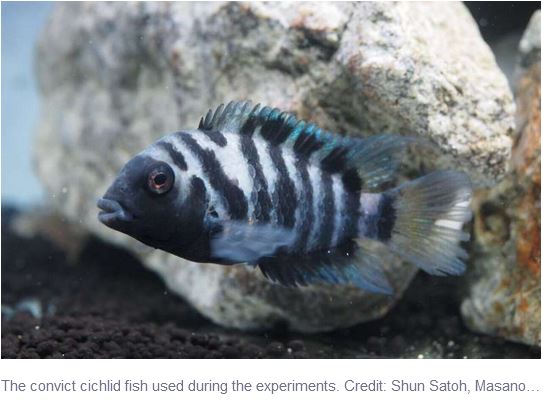
The convict or zebra cichlid fish is a fish species from the family Cichlidae, native to Central America.

With a length of 3.9 in. to 4.7 in. (10-12 cm) and a weight of 1.2-1.3 oz (34-36 gm), the tiny zebra cichlid are popular aquarium fish and the subjects of numerous studies on fish behavior.

A recent study found that zebra cichlid display altruistic or pro-social behavior — that of sharing food with another cichlid.

Osaka City University writes in Phys.org, March 19, 2021, that a Japanese research group led by Shun Satoh and Masanori Kohda, professor of the Graduate School of Science, Osaka City University, discovered experimental evidence of altruistic tendencies in zebra cichlid fish through a series of pro-social choice tasks (PCT) in which male cichlid were given two choices:

  1. An anti-social option of receiving food for themselves alone; and
  2. A pro-social option of receiving food for themselves and their partner.

Methodology:

  1. Experiment One: An experimental male fish was placed in a tank (A), and another fish was presented to the male fish in another tank (B):
    • When a female fish with whom the male fish had raised children was in tank B, the male fish actively made a pro-social choice and both fish received food.
    • But when there was no one in tank B, the male fish preferred neither the pro-social nor anti-social option.
  2. Experiment Two: To understand how the affected the fish’s pro-social nature, the team changed the partners to or females the experimental male fish had never met before:
    • The male fish actively chose the anti-social option of not feeding the rival male, but
    • Chose the prosocial option of feeding the unknown female as if it was their own breeding partner.
  3. Experiment Three:
    1. When the original female breeding-partner of the male fish was re-introduced to Tank B, the male fish made the anti-social choice of not feeding the female stranger fish.
    2. But when the original female fish was absent, the male fish made the pro-social choice of providing food for the unknown female.

Dr. Satoh said: “It can be said that the convict cichlid fish properly distinguish between paired females, unknown females, and rival males, and change their choices according to the situation.These PCT results mirror those from similar experiments with primates. However, this is the first time that caring and misbehaving behavior has been observed in fish. No one had ever expected such delicate and exquisite social behavior from such a small fish. Through more rigorous behavioral experiments, we hope to clarify whether these fish really have psychosociality and the motivation to produce it and also how the mind of this type of fish evolved to produce it.”

See also “Animal Altruism: Crow helps hedgehog cross road”.

~E

Palm Sunday: Beginning of the week that changed the world

Mark 11:1-10

When Jesus and his disciples drew near to Jerusalem,
to Bethphage and Bethany at the Mount of Olives,
he sent two of his disciples and said to them,
“Go into the village opposite you,
and immediately on entering it,
you will find a colt tethered on which no one has ever sat.
Untie it and bring it here.
If anyone should say to you,
‘Why are you doing this?’ reply,
‘The Master has need of it
and will send it back here at once.’”
So they went off
and found a colt tethered at a gate outside on the street,
and they untied it.
Some of the bystanders said to them,
“What are you doing, untying the colt?”
They answered them just as Jesus had told them to,
and they permitted them to do it.
So they brought the colt to Jesus
and put their cloaks over it.
And he sat on it.
Many people spread their cloaks on the road,
and others spread leafy branches
that they had cut from the fields.
Those preceding him as well as those following kept crying out:
“Hosanna!
Blessed is he who comes in the name of the Lord!
Blessed is the kingdom of our father David that is to come!
Hosanna in the highest!”

Today is Palm Sunday, the beginning of the holiest week in Christianity.

It is the week that changed the world.

The week in which the Son of God, who chose to become incarnate was a human so that He would be sacrificed, tortured horribly, nailed to a cross and left to die. All in atonement for the shattering, cataclysmic sin of grandiosity of our first parents, who chose to defy God’s explicit command because they thought themselves to be “like God” who could determine for themselves “what is good and what is evil” (Genesis 3:5), despite the fact that Adam and Eve already knew the answer to that question. As the Book of Jeremiah 31:33 says, when God created humans, He placed His law within each of us, written on our very hearts. Another way to say wanting to be their own God is “Do as thou wilt” — the satanic motto and zeitgeist of our corrupt time.

That first sin by our first parents left a birth stain on their children and every human who followed. It is the Original Sin of concupiscence that renders us into fomes peccati (tinder for sin), born with an appetite and inclination toward evil. And so, that first sin in that first garden opened the gates to the TIDAL WAVE of all the subsequent sins of humanity.

Wrongs require restitution — reparation made by giving an equivalent as compensation for loss, damage, or injury caused. So immense were the sin of our first parents and the sins of all humanity that no human could make amends. Only God Himself, in the person of the Son, could make that restitution. As St. Paul said in 2 Corinthians 5:21:

For our sake he made him to be sin who knew no sin, so that in him we might become the righteousness of God.

Our sins are so horrific that, while praying in the Garden of Gethsemane before the Roman soldiers came, Jesus actually sweated blood from seeing the immensity of evil for which He would atone — every sin of humanity, past, present and future, from the first to the last. As it was foretold in Isaiah 53:5:

But he was pierced for our transgressions,
he was crushed for our iniquities;
the punishment that brought us peace was on him,
and by his wounds we are healed.

That’s how much He loves us narcissistic, selfish, ever-bickering, ever-warring, utterly wretched, and downright murderous humans.

For many Christians, this Palm Sunday — and Easter, too — is particularly difficult because some churches are still closed due to local-state governments’  arbitrary and draconian COVID-19 policy. But we can offer our distress and difficulties to our Lord, as a special Lent penance.

And if you are so fortunate that your church isn’t closed today, you will receive a long piece of palm leaf. This video gives very easy-to-follow instructions on how you can make a cross from your palm.

And remember to tell Him “Thank you” and that you love Him with your whole heart, your whole soul, your whole mind, and with all your strength.

May the peace and love of Our Lord, Jesus Christ be with you,

~E

This is what happens to newborn babies in a COVID-19 world

We already know that in the COVID-19 world, people died and are dying alone because family members are not allowed to visit their loved ones in hospitals and nursing homes.

But I had no idea that newborn babies are subjected to this utterly inhumane treatment, deprived of human touch (h/t Ian Miles Cheong):

~E