Category Archives: Health

Madness: Coronavirus-vaccinated are ditching friends who refuse to be vaccinated

In March 2020, a Pew Research Center survey found that “white liberals” were more likely (46%) to have been diagnosed with a mental health condition compared with their moderate and conservatives peers.

The disparity was especially pronounced among young people, aged 18-19:

  • Nearly half of young white liberals (46%) reported being diagnosed with a mental health condition, whereas 26% of young white moderates and 21% of young white conservatives reported a mental health diagnosis.
  • The more liberal the young white liberals, the more mentally ill.
  • Young white females who identified as liberal or very liberal were by far the most likely (56%) to report a mental health diagnosis, compared with 28% of young moderate women and 27% of young conservative women.

Here’s the latest example.

Disproportionately more Democrats or liberals have chosen to receive the COVID-19 vaccine of whatever manufacturer, none of which has gone through the usual protocol of human trials, which means we simply don’t know what the long term  effects of these vaccines are.

While I believe that everyone has and should have the freedom to decide whether they want to be vaccinated, have you noticed that those who are vaccinated are downright hostile toward people who decline to be vaccinated?

Some time ago, a Facebook friend (I have one friend on my fake Facebook account using an alias in order to access content that is only available if I have an account) posted that she was considering not getting the Covid vaccine and asked her friends (who number 1,650) if they would get vaccinated. I responded, pointing out that the vaccine’s long term effects are unknown. The reaction to my comment was one of fury (angry emoji) from others who were  incandescent rage at my pointing out a fact, a truth. If I had been their Facebook friends, I’m sure they would have unfriended me.

Kate Mulvey in 2007 (source: Daily Mail)

Kate Mulvey is a free-lance UK journalist who regularly writes for The TelegraphIn an essay for The Telegraph on June 2, 2021, Mulvey related that when a “friend” said she declined the COVID-19 vaccine, Mulvey found herself “fuming” and “increasingly angry at those who refused to be vaxxed.”

Mulvey called those who refuse to be vaccinated “vaccine-dodging idiocy”. Applauding TV personalities (Countdown presenter Nick Hewer and Good Morning Britain host Adil Ray) who ditched friends who had decided not to have the Covid vaccine, Mulvey declared she too is “no longer seeing those friends who refuse to get jabbed.”

Here’s another example of their mental illness and irrationality.

A new study by German scientists at Munich University found that lockdowns had little effect on controlling the coronavirus pandemic. The statisticians found “no direct connection” between the German lockdown and falling infection rates in that on three occasions before a national lockdown was imposed in April, November and December 2020, infection rates had already begun to fall.

Notwithstanding the demonstrable ineffectiveness of lockdowns, a new Gallup survey found that as many as 71% of U.S. Democrats want healthy people to stay home “as much as possible,” even as vaccinations soar and new Covid infections have plummeted. In contrast, 87% of Republicans surveyed and 64% of independents said it was time for people to start living normally after more than a year of pandemic shutdowns and working from home.

~E

Enzyme used to develop COVID19 tests is named after Lucifer, aka Satan

https://fellowshipoftheminds.com/wp-content/uploads/2020/03/devil-wings.jpg

There is a rumor going around on the net that the COVID-19 vaccines contain luciferin (an organic compound) or luciferase (an enzyme). But that rumor was debunked by a Reuters fact-check:

The novel coronavirus vaccine manufactured by Moderna does not contain luciferin, an organic compound involved in bioluminescence, or the enzyme luciferase, contrary to claims on social media. While luciferase was involved in some COVID-19 research in the summer of 2020, none of the available vaccines contain either ingredient.

Suggesting a Satanic link, a post on Facebook reads, “MODERNA VACCINE CONTAINS “LUCIFERIN” IN A 66.6 SOLUTION. YOU CAN’T MAKE THIS STUFF UP (here). Other posts making this claim can be found here , here and here….

A fact sheet on the FDA’s website here discloses the ingredients in the vaccine. It includes mRNA, lipids, cholesterol, 1,2-distearoyl-sn-glycero-3-phosphocholine, tromethamine, tromethamine hydrochloride, acetic acid, sodium acetate, and sucrose.

It does not list luciferin, an organic compound that produces light through oxidation (here), in its ingredients, or mention anything about a “a 66.6 solution,” as the posts claim.

Moreover, none of the other available vaccines, manufactured by Pfizer, Janssen and AstraZeneca, contain luciferin, according to ingredients lists seen here , here and here.

However, Reuters determined that the enzyme luciferase is used to develop COVID-19 tests:

While the enzyme is not a vaccine ingredient, researchers at the University of Texas Medical Branch at Galveston last July isolated luciferase from fireflies to develop more accurate COVID-19 tests and potential treatments (here).

Scientists at the University of South Florida College of Public Health conducted similar research (here).

Reuters airily proclaimed that “Lucifer,” “luciferin” and “luciferase” all come from the Latin lux, meaning light, and ferre, meaning to carry, and that despite their shared etymology, the compound and enzyme are not related to the fallen angel.

Really?

Since the root word of “luciferin” and “luciferase” is the Latin “lux,” meaning light, if “light” is what is meant, the enzyme and compound in question should more accurately be named “luxferin” or “luxferase.”

Instead, “luciferin” and “luciferase” were chosen — deliberately — with full knowledge of the meaning of the word “lucifer” for Christians.

One must ask why.

Why would anyone name this enzyme “luciferase” or the organic compound “luciferin” after the fallen angel Lucifer, aka Satan?

~E

Chicago: 1,000 feral cats released to combat rat crisis

Through the years on FOTM, our DCG has diligently chronicled the weekly toll of gun homicides in the Democrats-ruled city of Chiraq or Chicago.

Now, in addition to gun homicides, Chicago is under siege by rats, which makes it a public health crisis.

Rats trapped & killed in a homeless encampment in Chicago (source)

The UK newspaper The Guardian reports on May 14, 2021 (bold red emphasis supplied):

An animal shelter in Chicago has released 1,000 feral cats throughout the city to combat a rat crisis.

Through a program called Cats at Work, the Tree House Humane Society, a local animal shelter, releases feral felines on to city streets. The initiative places two to three cats, all spayed, neutered and vaccinated, outside of residences and businesses to sustainably deal with Chicago’s rodent problem….

Local homeowners or businesses can sign up for the program, as long as they cover food, water and shelter for the cats. The popular program currently has a “long waitlist”, as stated on its website.

Issues with vermin aren’t new for Chicago. For the sixth consecutive year Chicago has beaten out major cities like Los Angeles and New York to be named the “rattiest city” in a poll conducted by Orkin, an American pest control company.

And that is why I call Democrats, Demonrats!

~E

Forgiving others is good for our mental health

Studies have found evidence that forgiving another confers mental health benefits on us.

Now, those studies are confirmed by a longitudinal study, every two years since 1989, of 54,703 female nurses from 14 states.

Interestingly, the Nurses’ Health Study II survey specifically assessed forgiveness that was spiritually or religiously motivated, with the specification that “Because of my spiritual or religious beliefs, I have forgiven those who hurt me.”

The study found that:

  • Those who reported having forgiven others more frequently showed subsequent improvements in positive affect and social integration compared to those who said they forgave never or seldomly.
  • Those who forgive also showed lower depressive symptoms, anxiety symptoms, loneliness, and hopelessness.
  • These results remained when controlling for various confounders such as age, race, marital status, religious service attendance, and income.
  • However, the study found no convincing evidence that forgiveness was linked to subsequent differences in physical health-related outcomes. But the study’s span of 7 years may not be enough time to observe the physical health consequences of forgiveness, especially considering the fact that stress-related physical health effects manifest themselves over time.

Led by epidemiologist Katelyn N. G. Long of the Harvard T.H. Chan Institute of Public Health, the study was published on October 1, 2020, in the journal, BMC Psychology.

H/t PsyPost

~E

Wednesday Funnies!

~E

The 4 elderly elites Caption Contest

This is our 242nd world-famous Caption Contest!

Here’s the pic (h/t DCG):

About the pic: On May 3, 2021, the Carter Library released the above photo of Joe (age 78) and Jill (age 69) Biden’s visit a week ago with former President and First Lady Jimmy (age 96) and Rosalyn Carter (age 93). (Source)

You know the drill:

  • Enter the contest by submitting your caption as a comment on this thread (scroll down until you see the “LEAVE A REPLY” box).
  • Body and Soul‘s writers will vote for the winner.
  • Any captions proffered by our writers, no matter how brilliant (ha ha), will not be considered. :(

This contest will be closed in two weeks, at the end of Tuesday, May 18, 2021.

To get the contest going, here’s my caption:

Four elderly elites from separate households gather without masks or social distancing. Still need evidence that COVID-19 rules are bogus?

For the winner of our last caption contest, go here.

~E

We need good news: Police officers save choking babies

Police officers respond to many different types of calls. Probably the most rewarding for them is being able to save a child’s life.

Grab a tissue…

If you have a need for this, go here to learn about infant/pediatric CPR.

DCG

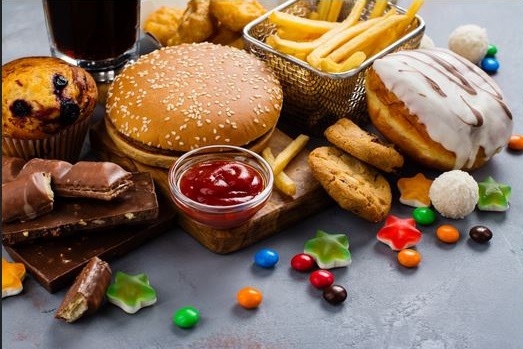
Why highly-processed foods are bad for us

The Department of Agriculture (USDA) defines processed food as any raw agricultural commodity that has been subject to washing, cleaning, milling, cutting, chopping, heating, pasteurizing, blanching, cooking, canning, freezing, drying, dehydrating, mixing, packaging or other procedures that alter the food from its natural state. This may include the addition of other ingredients to the food, such as preservatives, flavors, nutrients and other food additives or substances approved for use in food products, such as salt, sugars and fats.

According to the American Academy of Nutrition and Dietetics, processed foods range on a scale of minimally processed to mostly processed:

  1. Minimally processed foods — such as bagged spinach, cut vegetables and roasted nuts — are often simply pre-prepped for convenience.
  2. Foods processed at their peak to lock in nutritional quality and freshness include canned tomatoes, frozen fruit and vegetables and canned tuna.
  3. Foods with ingredients added for flavor and texture (sweeteners, spices, oils, colors and preservatives) include jarred pasta sauce, salad dressing, yogurt and cake mixes.
  4. Ready-to-eat foods — such as crackers, chips and deli meat — are more heavily processed.
  5. The most heavily processed foods often are frozen or pre-made meals, including frozen pizza and microwaveable dinners.

The Mayo Clinic counsels that whereas minimally-processed foods (#1 and #2 in the above list) like low-fat milk, whole-grain/wheat breads, pre-cut vegetables and fresh-cut greens have a place in healthful diets, heavily-processed foods (#4 and #5) should be avoided when possible. 

Here are the reasons why we should avoid consuming heavily-processed foods (the healthy employee):

  1. They contain little to no vitamins, minerals or fiber (“empty calories”), which are vital for health and wellbeing. The lack of fiber in ultra-processed foods lead to digestive disturbances such as bloating and constipation.
  2. They contain high quantities of salt, fat and sugar, all of which has a negative impact on your health.
  3. They are also high in additives and sweeteners, some of which make those foods addictive. One study showed that artificial sweeteners changed the brain pathways the regulated appetite, causing individuals to consume more calories and gain weight.
  4. They increase risk of:
    • Heart disease
    • Type 2 diabetes
    • Obesity
    • 18% higher risk of mortality

Here is another reason to shun heavily processed foods.

Medical News Today reports, April 2, 2021, that some common chemicals may harm our immune system, causing it to malfunction. This is known as immunotoxicityTrusted Source. These harmful effects may be temporary or permanent.

Possible immunotoxic effects include:

  • hypersensitivity
  • chronic inflammation
  • immunosuppression, or an impairment of the body’s ability to fight off infections
  • immunostimulation, which can cause tissue damage through immune responses
  • autoimmunity

In particular, if an immunotoxic substance causes the body to produce fewer antibodies, it can have an effect on the fight against active infections and the protection against future ones.

The FDA currently require immunotoxicity testing for food additives. However, most food additives received approval decades ago, and the FDA do not mandate updated testing on previously approved additives. The immunotoxicity of many food additives and food contact substances is largely unknown.

Below are two widely-used preservatives in heavily-processed foods which are harmful to our immune system:

  1. TBHQ (tertiary butylhydroquinone) is a common preservative that manufacturers use to prolong their products’ shelf lives, present in almost 1,250 processed foods, including Cheez-It crackers, Pop-Tarts, Reese’s Peanut Butter Cups, and Little Debbie Swiss Rolls. But TBHQ is found that have immunotoxic effects in animal studies.
  2. PFAS (per- and polyfluoroalkyl substances) are chemicals that coat packaging or food processing equipment which may leach from some bags, boxes and food wrappers into food. PFAS-based materials are also common in non-stick coatings on cookware, gaskets in food processing equipment, and repeat-use plastics. Testing conducted by the Environmental Working Group (EWG) found that TBHQ may have immune suppressive effects. The researchers analyzed a total of 63 direct food additives present on more than 10 product labels sold in the U.S. in 2018–2020. They also specifically assessed nine identified PFAS that migrate from food packaging to food. The findings are published in the International Journal of Environmental Research and Public Health.

Scott Faber, senior vice president for government affairs at the EWG, said: “Food manufacturers have no incentive to change their formulas. Too often, the FDA [allow] the food and chemical industry to determine which ingredients are safe for consumption. Our research shows how important it is that the FDA take a second look at these ingredients and test all food chemicals for safety.”

~E

Alarming increase of STDs among senior Americans

The eight common STDs (sexually transmitted diseases) or STIs (sexually transmitted infections), otherwise called venereal diseases, are chlamydia, gonorrhea, hepatitis B virus (HBV), herpes simplex virus type 2 (HSV-2), human immunodeficiency virus (HIV), human papillomavirus (HPV), syphilis, and trichomoniasis. Chlamydia, trichomoniasis, genital herpes, and HPV. Together, they  accounted for 98% of all STIs and 93% of all new STIs in 2018.

The Centers for Disease Control and Prevention (CDC) estimates that on any given day in 2018, 20% of the U.S. population – approximately one in five or 68 million people – had an STD. The cost to the American healthcare system was nearly $16 billion in healthcare costs, but the total cost far exceeded the medical cost because there are also other associated costs in lost productivity, other non-medical costs, and STD prevention.

According to the CDC’s annual Sexually Transmitted Disease Surveillance Report, 2018 saw increases in STDs, including:

  • An increase in syphilis by 14% (35,000 cases), the highest number reported since 1991, including increases in the number of primary and secondary syphilis cases – the most infectious stages of syphilis. In total, there were more than 115,000 syphilis cases documented,  the highest number reported since 1991.
  • Gonorrhea increased 5% to more than 580,000 cases – also the highest number reported since 1991.
  • Chlamydia increased 3% to more than 1.7 million cases – the most ever reported to CDC.

Dr. Oz and Michael Roizen, M.D., reported in December 2018 that a National Poll on Healthy Aging of more than 1,000 people ages 65 to 80 found that nearly three-quarters said they had a romantic partner, and 54% of them were sexually active.

But many of the sexually-active seniors are not practicing safe sex. STDs are at an all-time high among the elderly:

  • From 2007 to 2012, syphilis increased by 52% and chlamydia increased by 32%.
  • According to AARP, every year since then has seen about a 20% jump in the incidence of STDs. 

The CDC reports that while young Americans, aged 15-24, accounted for half of new cases of STDs, cases of several common STDs (chlamydia, gonorrhea and syphilis) reached historic highs among older Americans, aged 55 and older:

  • Washington D.C., New York, and Maryland saw the highest instance of STDs among populations 55 and older with an average STD rate per 100,000 at 881.8, 236.2, and 172.7 respectively.
  • While Montana, Wyoming, and North Dakota had the lowest instance of STDs among people aged 55 and older at 20, 17.8, and 14.9 per 100,000 respectively, they actually saw the highest percentage increases in STD contraction between 2008 and 2017 with Montana having a 275.1% increase (the highest among any state), Wyoming have a 239.7% increase (the second highest), and North Dakota having a 224.6% increase (5th highest).

Why the rising incidence of STDs among seniors:

  • Older people who have gone through menopause and andropause decrease using preventative measures such as condoms because pregnancy is no longer an issue.
  • For whatever reason, older people tend to under estimate their risk of contracting STDs.

This is a serious problem not only because of STDs’ health and financial costs, seniors with STDs are also at increased risk of more deadly illnesses, such as heart disease, cancer, and HIV.

Indeed, the CDC report says that although the prevalence of HIV (human immunodeficiency virus that causes AIDS) had remained roughly steady in the U.S. over the past several years, as many as 17% of the nearly 39,000 people newly diagnosed with HIV were 50 or older.

Since older people, for whatever reason, are less likely to test for HIV, this increases their risk of having a late-stage HIV infection, which means they could have already experienced major damage to their immune systems.

Instead of age conferring wisdom, older Americans are getting more stupid.

~E

Too much iron in your blood a risk factor of early death

Iron is an essential mineral in our bodies because (source1; source2):

  • Without a sufficient amount of iron, your body can’t produce enough hemoglobin, a substance in red blood cells that makes it possible to carry oxygen to the body’s tissues.
  • Iron is used by the body to help regulate cell growth and cell differentiation.
  • Iron also helps keep your hair, skin and nails healthy.
  • Iron is also found in myoglobin, a protein that helps carry oxygen to the muscles and in some enzymes that help in biochemical reactions.

Free iron is toxic to cells. Hence, humans and other vertebrates have an elaborate set of protective mechanisms to bind iron in various tissue compartments.

In vertebrates, iron is stored in an intracellular protein as ferritin — usually found within cells, although it is also present in smaller quantities in (blood) plasma. Plasma ferritin is an indirect marker of the total amount of iron stored in your body.

The normal range of ferritin is 22 to 291 ng/mL (nanograms per milliliter).

An iron deficiency can reduce oxygen delivery to the cells, leaving a person fatigued and with a compromised immune system.

Anemia is a health condition that develops when your blood has a deficiency of red blood cells or of hemoglobin in the blood. Hemoglobin makes up two-thirds of the body’s iron levels.

Symptoms of anemia include:

  • Fatigue or tiredness
  • Dizziness
  •  Shortness of breath
  • Cold hands and feet
  • Headaches
  • Rapid heart beat

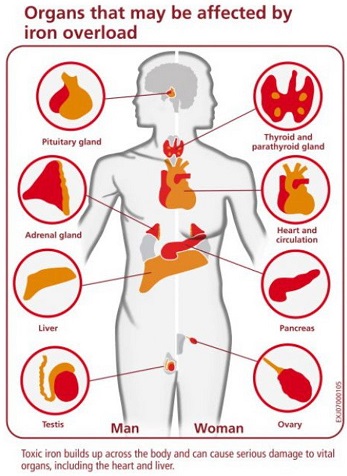
Iron supplements are over the counter, but it can be very unhealthy and dangerous to take too much iron because the body cannot easily get rid of iron and will start depositing the excess iron in the heart, pancreas and liver. This can cause liver cancer, cirrhosis, diabetes and cardiac arrhythmias. The only way to shed excess iron in your body is by donating blood. (NYT)

In fact, a massive study published in 2020 found a link between blood iron (ferritin) levels and lifespan. 

David Nield reports for Science Alert that a study of genetic information from over 1 million people across three public databases found that having too much iron in the blood is linked to an increased risk of dying earlier. The study was published in July 2020, in the journal Nature Communications.

Paul Timmers, a data analyst from the University of Edinburgh in the UK, said: “We are very excited by these findings as they strongly suggest that high levels of iron in the blood reduces our healthy years of life, and keeping these levels in check could prevent age-related damage. We speculate that our findings on iron metabolism might also start to explain why very high levels of iron-rich red meat in the diet has been linked to age-related conditions such as heart disease,” Parkinson’s and liver disease.

While correlation doesn’t necessarily mean causation, the researchers used a statistical technique called Mendelian randomization to reduce bias and attempt to infer causation in the data.

We can add this latest study to the growing evidence that “iron overload” can have an influence on how long we’re likely to live, as well as how healthy we’re likely to be in our later years.

~E