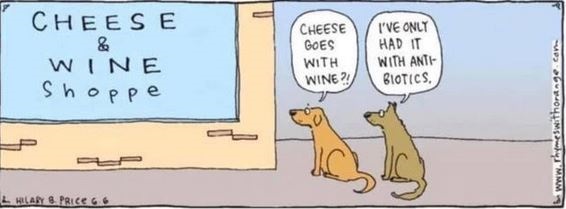
Our companion animals are really smart.
Watch these dogs and cats open doors — to the bathroom, of a car, and especially refrigerator doors. One cat even “turns on” a faucet for drinking water. 😀
~E

Our companion animals are really smart.
Watch these dogs and cats open doors — to the bathroom, of a car, and especially refrigerator doors. One cat even “turns on” a faucet for drinking water. 😀
~E
Posted in cats, dogs, God's creation
Here’s the video:
So much strength being communicated here… pic.twitter.com/yfY5dCuEcm
— Danny De Urbina (@dannydeurbina) February 2, 2022
About the video: On February 2, 2022, after a speech announcing plans to relaunch the White House’s “Cancer Moonshot” initiative, 79-year-old Joe Biden seemed to lose his way as he left the podium. He wandered in the wrong direction and had to be led off the stage by his wife, Jill. (The Blaze)
You know the drill:

This contest will be closed at the end of Tuesday, February 22, 2022.
To get the contest going, here’s my caption:
No worries, all you Biden voters. His finger is on the nuclear button!
For the winner of our last Caption Contest, click here.
~E
Posted in Caption contest, Fun, Joe Biden, The Left
…for our 253rd Caption Contest!
Our writers dutifully voted for their #1 and #2 captions. Each #1 vote is worth 4 points; each #2 vote us worth 2 points.
And the winner, with two #1 votes, two #2 votes, totaling 12 points, is:
Here is the winning caption:

How about that, AOC fits right in with this circus freak show.
GregB is in 2nd place, with two #1 votes and 8 points:
“Give them bread and circuses and they will never revolt.” -Juvenal
With grocery and other store shelves now having many bare spots, this is how the latest bread (Gov’t stimulus checks) and circuses like this freak show keep people from revolting against the many evils being forced upon us amid a tsunami of endless lies (bio-weapon spike protein clot shots posing as “vaccines.”)
Arche N. (with two #2 votes) and Calgirl (with one #1 vote) are in 3rd place with 4 points each:
Arche N.: “Kiss me, kiss up to me–what’s the difference? I’m AOC (not A-OK)!”
Calgirl: “In a nutshell, proof that God takes care of the mentally challenged, the inept; unable; the socially bereft. The rest of us fend for ourselves with what God gave us.”
Jackie Puppet is in 4th place, with one #2 vote and 2 points:
How much longer before she hugs Michael Obama? AOC obviously is into black shemales!
WELL DONE, EVERYONE!

For all the other caption entries, go here.
This was a difficult contest. To quote reader Jackie Puppet: “This picture is a tough one to caption!”
You can help by submitting interesting pics that you think would be great for our caption contests, by emailing them to me to:
FOTM4ever@outlook.com
Thanks!
Be here later today for our next very exciting Caption Contest!
~E

The Eurasian blue tit is a small blue-and-yellow bird, 4.7 in long with a wingspan of 7.1 in, and weighs only 0.39 oz.
Usually resident and non-migratory, blue tits are widespread throughout temperate and subarctic Europe. They usually nest in tree holes, although they easily adapt to nest boxes.
The Eurasian blue tit is a valuable destroyer of pests. No species destroys more coccids and aphids, the worst foes of many plants.
Here’s a live cam video of a Blue Tit making a luxurious nest inside a box:
And here’s a live cam video of the Blue Tit hatching her first egg:
God is good!
~E
The saying “you are as young as you feel” turns out to be true.
A 2018 South Korean study found that people who feel they are younger than their chronological age have healthier brains!
The research was conducted by Seoul National University psychologists Seyul Kwak, Hairin Kim and Jeanyung Chey, and Yongsei University sociologist Yoosik Youm. Their study, “Feeling How Old I Am: Subjective Age Is Associated With Estimated Brain Age,” was published on June 7, 2018, in the peer-reviewed journal Frontiers in Aging Neuroscience.
From the article (bold red emphasis supplied):
While the aging process is a universal phenomenon, people perceive and experience one’s aging considerably differently. Subjective age (SA), referring to how individuals experience themselves as younger or older than their actual age, has been highlighted as an important predictor of late-life health outcomes. However, it is unclear whether and how SA is associated with the neurobiological process of aging. In this study, 68 healthy older adults underwent a SA survey and magnetic resonance imaging (MRI) scans. T1-weighted brain images of open-access datasets were utilized to construct a model for age prediction. We utilized both voxel-based morphometry (VBM) and age-prediction modeling techniques to explore whether the three groups of SA (i.e., feels younger, same, or older than actual age) differed in their regional gray matter (GM) volumes, and predicted brain age. The results showed that elderly individuals who perceived themselves as younger than their real age showed not only larger GM volume in the inferior frontal gyrus and the superior temporal gyrus, but also younger predicted brain age. Our findings suggest that subjective experience of aging is closely related to the process of brain aging and underscores the neurobiological mechanisms of SA as an important marker of late-life neurocognitive health….
Our findings suggest that feeling subjectively older than one’s age may reflect relatively faster aging brain structures, whereas those who feel subjectively younger would have better-preserved and healthier structures. This study, to our knowledge, was the first attempt to examine the neuroanatomical underpinnings of SA….
[O]ur findings extend the hypothesis that older SA is associated with greater progression of brain aging process and poorer brain health. Significant tissue atrophy in the GM and older brain age may be reflective of cerebrovascular risks (Seo et al., 2012; Lockhart and DeCarli, 2014), and such changes may cause older adults to appraise their deteriorated functions as being a result of their aging (Vestergren and Nilsson, 2011).
Consistent with previous studies that have reported the clinical significance of subjective perceptions of cognitive decline (Rabin et al., 2017), subjective appraisal of one’s own decline may provide information on neurobiological changes not otherwise detectable with objective cognitive tests…. Diminished volumes of GM and older brain age may lead to reduced processing efficiency in a variety of demanding cognitive tasks, and this prolonged mismatch between reduced neural resources and burdensome environmental demands can create a subjective perception of aging. Individuals with older SA feel older because they experience frequent negative sensations as they make more cognitive efforts in daily life compared to those who report younger or same SA….
In our study, while older SA group showed a tendency to have poorer cognitive function and exhibit greater depressive symptoms, feeling younger was especially associated with younger structural characteristics of the brain.
For the article in full, click here.
There are online calculators to estimate your biological age vs. chronological age. Here’s one.
See also “Being overweight ages your brain“.
~E
We already know from studies that excess weight, especially visceral fat — body fat that’s stored within the abdominal cavity — increases the risk of many conditions, such as:
Now, there is evidence that excess fat may have mental effects as well — that having too much fatty tissue in the body impairs our brains.

Lizzo is a rapper who is proud of being fat, and is lauded for her “body positivity”. In a recent video, she celebrates having put on more weight, calling her fat acceptance “unconditional self-love”. (New York Post)
A recent Canadian study of 9,200 adults aged 30 to 75 years found what appears to be fat’s direct harm on one’s ability to think quickly, even after taking into account heart health, brain status (injury) and education. The researchers found that as body fat rose, people processed information more slowly, as if their brains had actually aged — by as much as one year for every 9% increase in overall body fat. Excess body fat also appeared to boost the risk for brain injury, including lesions or the kind of markers that indicate a history of unrecognized (“silent”) strokes. (NewsMax)
Scientists believe that the association between excess weight and cognitive impairment may be due to (Medical News Today):
The way to lose body fat is not a mystery: Eat less and exercise.
And the exercise can be as simple as walking.
If everyone between 40 and 85 years of age were active just 10 minutes more a day, it could save more than 110,000 U.S. lives a year, a large study reports. The study’s lead scientist, Pedro Saint-Maurice of the Metabolic Epidemiology Branch at the U.S. National Cancer Institute in Bethesda, Maryland, said: “Our projections are based on an additional 10 minutes of moderate to vigorous physical activity. If the walk is brisk, it counts.”
Do you have joint pains?
Did you know that regular exercise is also good for joint health?
Leading a sedentary lifestyle — spending too much time sitting or lying down — can be harmful to your joint health and even exacerbate preexisting joint problems. Getting regular exercise is an excellent way to prevent future joint issues and treat preexisting arthritis. (St. John’s Health)
The Centers for Disease Control and Prevention (CDC) recommends that adults get at least 150 minutes of moderate-to-vigorous intensity physical activity each week.
That means just 30 minutes of exercise 5 days a week. We can do that, can’t we?
See also “10 reasons why exercise is good for us“.
Update (Feb. 8, 2022):
Here’s another reason for regular exercise: Exercise can help prevent Alzheimer’s, the most common form of senile dementia (WebMD):
~E
I am reminding you, brothers and sisters,
of the gospel I preached to you,
which you indeed received and in which you also stand.
Through it you are also being saved,
if you hold fast to the word I preached to you,
unless you believed in vain.
For I handed on to you as of first importance what I also received:
that Christ died for our sins
in accordance with the Scriptures;
that he was buried;
that he was raised on the third day
in accordance with the Scriptures;
that he appeared to Cephas, then to the Twelve.
After that, Christ appeared to more
than five hundred brothers at once,
most of whom are still living,
though some have fallen asleep.
After that he appeared to James,
then to all the apostles.
Last of all, as to one born abnormally,
he appeared to me.
For I am the least of the apostles,
not fit to be called an apostle,
because I persecuted the church of God.
But by the grace of God I am what I am,
and his grace to me has not been ineffective.
Indeed, I have toiled harder than all of them;
not I, however, but the grace of God that is with me.
Therefore, whether it be I or they,
so we preach and so you believed.

Two Sundays ago, in my post, “Sunday Devotional: Faith, Evidence and Logic,” I made the case for Christian belief not based exclusively on faith, but also on empirical evidence and logical reasoning.
The empirical evidence for Christianity includes the testimonies of percipient witnesses, which are critical to the determination of truth in law. A “percipient witness” is defined by Nolo’s Plain-English Law Dictionary as “A witness who testifies about things she or he actually perceived. For example, an eyewitness.”
Today’s second reading from St. Paul’s letter to the Corinthians is yet another example of percipient witnesses — eyewitnesses of the resurrected Jesus of Nazareth who, on one occasion, numbered more than 500 people.
Those percipient witnesses told others (“so we preach”) about the resurrected Christ whom they had seen with their very eyes and heard with their very ears. Their first-person testimonies were so powerful that others were convinced of their veracity (“so you believed”).
To quote New Testament Professor Emeritus Mark Allan Powell in his book, Jesus As a Figure in History, p. 9 (bold emphasis supplied):
[F]or me…the Jesus of this story has come to mean…recognizing the story to be grounded in the witness of the Spirit, in the testimonies of saints and martyrs, and in my own life experience…. I think of the story…not as the place where I look for Jesus but as the place where he finds me.
May the love and peace of Our Lord Jesus Christ be with you,
~E

Australia has become a tyrannical state, using Covid as the excuse.
The latest: On January 13, 2022, the government of Western Australia, in the person of Premier Mark McGowan, announced that beginning tomorrow (January 31), the unvaccinated will be locked down, barred from most public settings, and that the rules “will not be removed any time soon.”
Australia has undertaken this downright vicious policy despite the fact that being vaccinated affords little to no protection from the Covid virus of whatever variant, the truth of which is confirmed recently by the positive Covid tests and symptoms of two fully-vaxxed friends of mine. (See my post “Questions raised by fully-vaccinated Colin Powell’s death from COVID-19”.)
Meanwhile, two countries — England and Ireland — are doing the exact opposite. Instead of doubling down on Covid restrictions, they actually are ending the lockdown, effectively declaring an end to the pandemic.
On January 19, 2022, UK Prime Minister announced the end of all Covid measures, including compulsory mask-wearing on public transport and in shops, work-from-home guidance, the need to show a certificate proving vaccination or a recent negative Covid test to enter some venues, the legal requirement on people with coronavirus to self-isolate, and an immediate end to the need for pupils to wear masks at secondary (high) schools. Johnson said: “In the country at large we will continue to suggest the use of face coverings in enclosed or crowded spaces, particularly when you come into contact with people you don’t normally meet, but we will trust the judgment of the British people and no longer criminalise anyone who chooses not to wear one.” (The Guardian)
January 21, 2022, Prime Minister Micheál Martin declared that most Covid restrictions in Ireland would end the next day (Jan. 22), including vaccination certificates or passports, curfews, social distancing, restrictions on private indoor meetings (up to four families), and capacity limits for events and weddings. However, mask-wearing is still required on public transport for those aged 9 and over, in schools for children, and in most indoor public spaces for those aged 13 and over, unless food and drinks are being consumed. Testing and isolation guidance for people with Covid symptoms and positive tests, and their contacts remain the same.
Martin said: “Humans are social beings and we Irish are more social than most. As we look forward to this spring, we need to see each other again. We need to see each other smile. We need to sing again…it is time to be ourselves again.” He said people’s trust in the government is a “precious and powerful,” yet “fragile” thing that requires “confidence that the government will do what is needed in an emergency,” as well as knowing “their government will not impose restrictions on their personal freedoms for any longer than is necessary.” (Epoch Times)
But did you hear or see this earthshaking news in the mainstream media?
No?
Why’s that?
~E
Posted in COVID-19, COVID-19 vaccine, Evil, The Left
Tagged end of Covid lockdown, PM Boris Johnson, PM Micheál Martin, Premier Mark McGowan